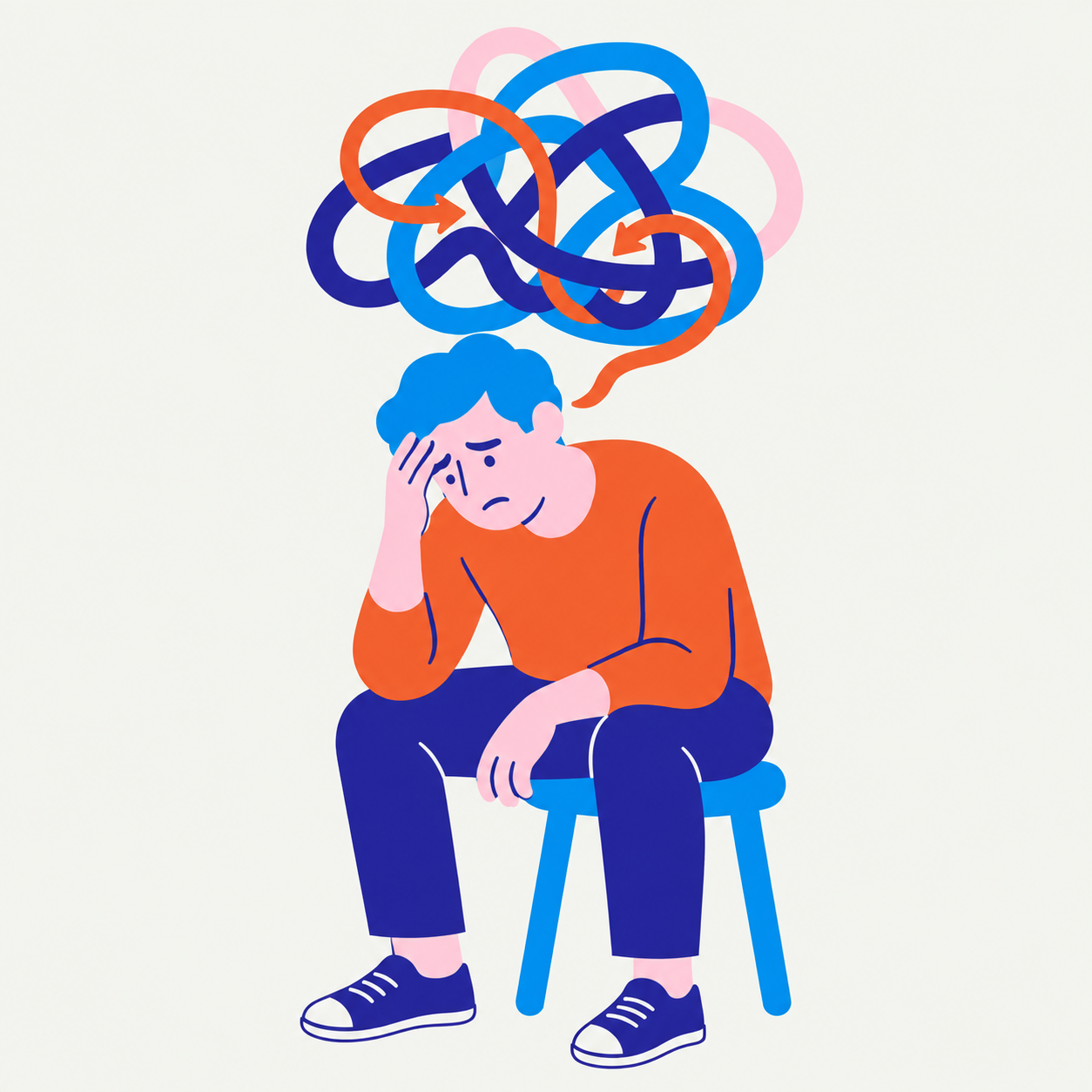
You put off situations that make you tense.
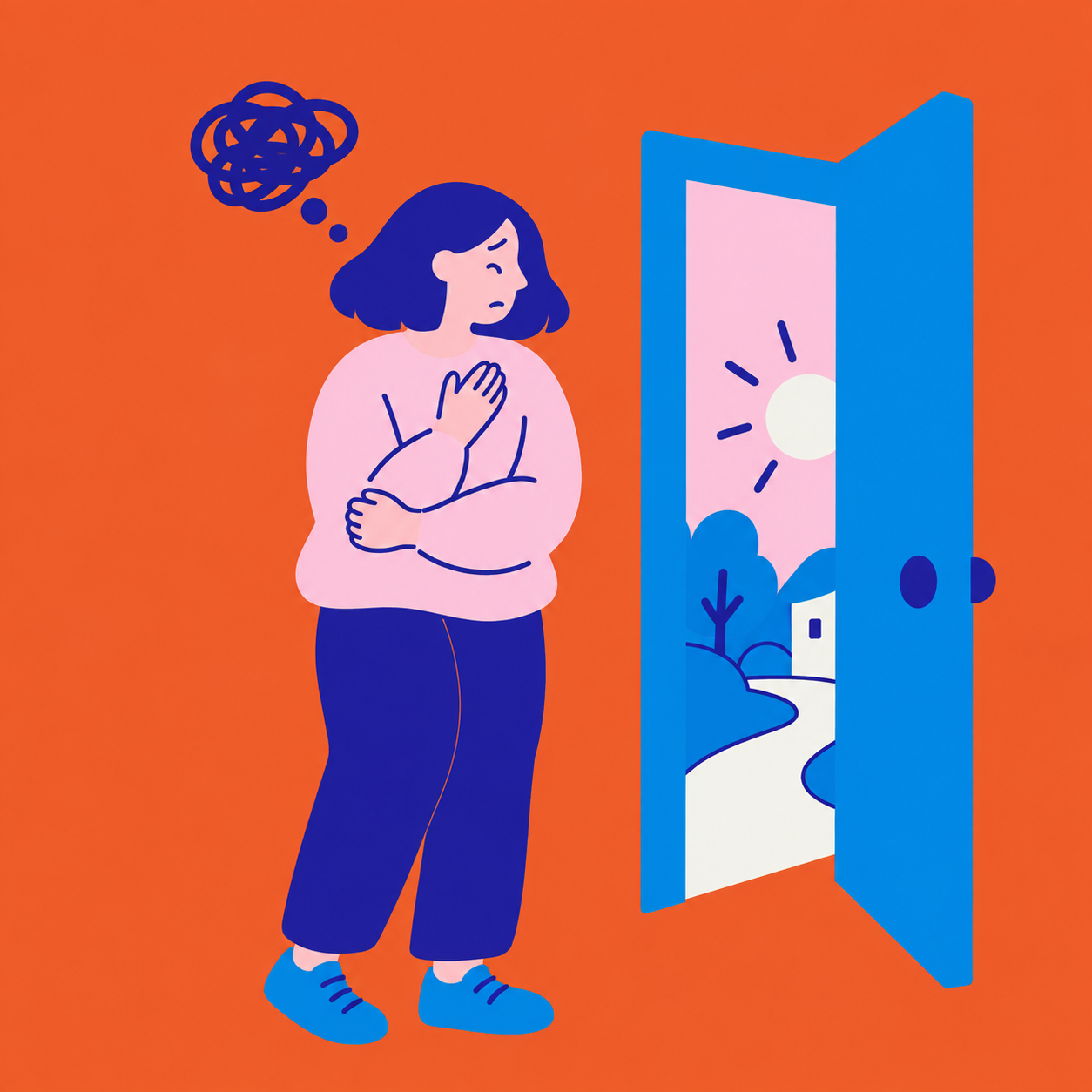
Something we can work on
Anxiety and worry
You worry, expect the worst and avoid situations you would like to take part in. I also work with people who have already been diagnosed with an anxiety disorder.
 Terapia CBT Online
Sandra Machoń
Terapia CBT Online
Sandra Machoń
I provide cognitive behavioural psychotherapy for adults online, in Polish and English. I work with anxiety, low mood, stress and overthinking that get in the way of everyday life. Together, we explore what keeps these difficulties going and try out changes in how you think and respond.
Something we can work on
You worry, expect the worst and avoid situations you would like to take part in. I also work with people who have already been diagnosed with an anxiety disorder.
Something we can work on
There is always something to do, something to remember or someone’s expectations to meet. Pressure and tension persist, and you feel constantly on alert.
Something we can work on
Energy is low, you withdraw from activities and everyday tasks take more effort. Therapy can address both low mood and depression.
Something we can work on
You replay conversations, go over decisions and wonder what you should have done differently. You look for answers, but thinking it through again doesn’t bring relief.
You don’t need a diagnosis to arrange a consultation. If you already have one, we will take it into account when planning therapy.
During a consultation, we will explore how these difficulties affect your life. We will identify what matters most to you and what you would like to work on.

Hi, I’m Sandra Machoń. I am a psychotherapist working towards certification. I provide cognitive behavioural psychotherapy for adults online, in Polish and English.
I am in the third year of the four-year programme at the WSB-NLU School of Cognitive Behavioural Psychotherapy. I work under supervision.
I worked as a research assistant in cognitive neuroscience. My research concerned the relationship between childhood trauma and brain structure, and the role of emotional regulation in addiction.
This scientific background is one reason I value CBT: the work draws on a psychological model, available research and an individual understanding of each person’s difficulties. Your experiences, goals and feedback on what helps shape the direction of therapy.
Academic education completed in London: a BSc in Psychology at the University of Roehampton and a master’s degree (MSc) in Neuroscience at King’s College London.
Psychotherapy training: year three of the four-year CBT programme at WSB-NLU. The school’s programme is accredited by Polskie Stowarzyszenie Psychologów, Psychoterapeutów i Lekarzy (PSPPiL, the Polish Association of Psychologists, Psychotherapists and Physicians) and the Professional School of Health Sciences (PSoHS). These accreditations apply to the training programme. I am still in training and have not yet obtained a psychotherapy certification.
I have also completed training in affirmative support for LGBT+ people.
I am in the third year of the four-year programme at the WSB-NLU School of Cognitive Behavioural Psychotherapy. I have completed at least two years of training, as confirmed by a certificate issued by the training provider. I also participate in psychotherapy supervision.
I hold a master’s degree and meet the requirements for a person applying for a psychotherapist certificate, as referred to in Article 5(3)(4) of the Polish Mental Health Protection Act of 19 August 1994.
I provide psychotherapy while in training and regularly submit my work for supervision. Documents confirming my stage of training and participation in supervision are available for inspection.
Cognitive behavioural therapy is grounded in research. Its methods are developed and tested, and evidence-based treatment approaches exist for many difficulties and mental health conditions.
We start with an individual formulation: a shared understanding of how a problem developed and what keeps it going. Alongside your goals and any existing diagnosis, this helps us choose CBT methods and protocols that fit your needs. A diagnosis is not required to begin therapy.
Sessions have a structure and goals that we review regularly. Therapy may also include work between sessions: observations, exercises, behavioural experiments or trying a new way of responding. We plan these together and explore what helps.
CBT is an active therapy. It is not about telling you what to think or persuading you to think positively. We learn to recognise patterns of thinking and behaviour, examine how accurate and helpful they are, and develop different ways to respond.
The meaning we give a situation connects with how we feel and respond. Choose an example and explore how these elements can influence one another.
“They’re ignoring me. That means I don’t matter.”
These elements influence one another
This is how we understand an event: predictions, judgements and beliefs about ourselves, others or the world. A thought can feel certain without being a fact.
What supports this thought, and what might point to a different explanation?
We’ll talk about what led you to consider therapy, how the difficulty affects your life and what you hope to get from our work together.
I’ll also ask about previous treatment, therapy and any diagnoses. You don’t need a prepared history or a diagnosis to begin this conversation.
I’ll explain how I work, discuss the practical arrangements and answer your questions. The first consultation is the beginning of understanding the problem together.
The plan draws on your difficulties, your goals, any existing diagnosis and an individual formulation, meaning our shared understanding of what keeps the problem going.
For many conditions, we can use established CBT treatment protocols. These provide a map for choosing interventions. We adapt the pace, specific exercises and goals to your circumstances.
We bring together our understanding of the problem and choose goals that matter to you.
We discuss specific situations, explore ways of coping and plan small actions to try outside our sessions.
We return to the goals we agreed on. We talk about changes, difficulties and what we need to adjust in our work.
We reflect on what has been helpful and consider how you can draw on these experiences after regular meetings come to an end.
CBT is usually time-limited, but there is no single right number of sessions. The length of therapy depends on the difficulties, their history, your goals and how the work develops.
One aim is to develop skills you can use without a therapist: recognising your own patterns and responding to difficult thoughts, feelings and situations. We plan the ending together, including how you can keep using these skills afterwards.
You’ll need a stable internet connection and a private space where you feel able to speak freely. Sessions are available in Polish and English.
The fee is the same for sessions in Polish and English.
Before arranging a meeting, please get in touch if you’d like to ask about how to connect, payment or changing an appointment.
Book an initial consultation Working together: terms (PL)You don’t have to decide about a whole course of therapy now. An initial consultation is a chance to talk about your situation, ask questions and see whether you would like to work with me.
Have a question before booking? Get in touch.
sandramachon.cbt@gmail.comYou can also call:
(+48) 720 427 426You don’t need to describe your situation in detail in your first email.
Need urgent support? Working together: terms (PL)No. You can arrange a consultation without a diagnosis. If you already have one, we will consider it alongside your goals and our individual understanding of the problem when planning therapy.
Yes. You don’t need a prepared description or a diagnosis of what you’re going through. We can start with what has been difficult lately and what led you to seek support.
The consultation and each psychotherapy session last 50 minutes. CBT is usually time-limited, but there is no set number of sessions. The length depends on the difficulties, their history, your goals and how therapy develops. We discuss the plan together and review progress regularly.
Yes. In CBT, work between sessions is a very important part of therapy. It may include noticing particular situations, writing down thoughts or trying a different way of responding. We agree on it together and adapt it to your situation and capacity.
I am in the third year of the four-year programme at the WSB-NLU School of Cognitive Behavioural Psychotherapy. I have completed at least two years of training, as confirmed by a certificate issued by the training provider. I also participate in psychotherapy supervision.
I hold a master’s degree and meet the requirements for a person applying for a psychotherapist certificate, as referred to in Article 5(3)(4) of the Polish Mental Health Protection Act of 19 August 1994.
I provide psychotherapy while in training and regularly submit my work for supervision. Documents confirming my stage of training and participation in supervision are available for inspection.
Before we begin working together, we’ll discuss confidentiality, its limits and how your data is protected. You can also ask about these matters before arranging your first meeting.
No. I provide psychotherapy for adults of all genders. Women’s mental health is a particular professional interest of mine.
You can tell me that. I don’t expect a prepared story. I’ll help us begin by asking questions, and we can pause whenever you need a moment.
Yes. Because we work online, we are not limited to a particular country. If therapy can be conducted in Polish or English, we can work together wherever you live.
You can tell me. We’ll discuss what feels difficult and whether we can change anything about the way we work. You can also decide that you don’t want to continue.